Thursday, September 1, 2011

The Black Legend and English Colonization

I.) Spain and the “Black Legend”  -- Spain’s mistreatment of native inhabitants in the New World legitimated the attempts by other European governments (Netherlands, France, and England) to attempt to undermine Spanish control, and to make their own claims in order to proselytize Christianity—and to seek riches in the territory that they could claim and hold.
A)      Cortes and Pizzaro—the phenomenal success of Cortez with the Aztecs and Pizzaro with the Inca people set the early model for Spanish behavior in the new world—the conquest. This model had only limited success after Cortes and Pizzaro, however; outside of the centralized native societies in Mexico and South America, the Spanish found it nearly impossible to maintain their advantage and control.
i)        Cabeza de Vaca—part of a conquistadores party led by Panfilo de Narvaez, who was determined to outdo rival Cortes in Florida. Plagued by hit-and-run raids from Apalachee people, planned to build barges and coast around Gulf from present-day Tampa back to Mexico; on the Texas coast five barges caught in storm and wrecked. Passed among numerous native peoples because of their “healing powers.” Ultimately made it back to Mexico, where Cabeza de Vaca became an advocate for humane treatment of natives (and to publish an account of the to-then inhumane treatment; along with Casas, these accounts led to a change in policy for Spanish—but also to the idea of the Black Legend); two others in the party came back with fantastic stories of lost cities filled with gold.

2)       Hernando de Soto—accompanied Pizzaro to Peru, which had made him a rich man, but he wanted to outdo Cortes, as well. Both Soto and Coronado, who followed him, were supposed to follow the new, gentler “pacification” policy of the Spanish government. Once in the bush, however, both leaders permitted their men to follow the old conquistador’s model of rape, pillage, murder and mayhem. Along with the microbes that accompanied the Spaniards, this devasted the Mississippian peoples, forcing them to abandon their cities (the seats of their advanced culture), and move in among the hill people, who had been their subjects, and who had a less advanced culture.

3)     Francisco Vasquez de Coronado—excited by the prospects of finding “Cibola,” a city in the American southwest purported to rival the wealth of Tenochtitlan, Coronado invested most of his own wealth in financing a party to find it in 1540. As the group neared the Rio Grande, they came upon a group of Pueblo people; appropriating their food, houses, and women.


B.) Spanish forces in Florida—because of the success of privateers, Spanish officials came to see the necessity of controlling the waters between Florida and the Bahamas. To that end, they set up a military installation at St. Augustine, the first permanent settlement of Europeans in the present-day confines of the US. In order to hold this settlement, however, felt it necessary to defeat nearby settlement of French Huguenots (protestants) who the Spanish “put to the knife.” Although maintaining St. Augustine was a money loser, Spain did so in order to attempt to keep privateers from feasting on the annual convoy between Mexico and Spain.

 Clash of Cultures at Jamestown

1. Roanoke Island-- Financed and organized by a Queen Elizabeth favorite, Walter Raliegh, settlers were place on the largest of the Outer Banks islands, Roanoke, to build a settlement. In part, this would provide the English with a claim to "ownership" of the land, and in part to provide their privateers with a base to raid ships sailing past in the Gulf Stream laden with gold and silver from the Spanish Main.

a)     Virginia Company – group of investors, expecting a return on their investment, on the model of the West Indies Company that had financed the sugar plantations in the British Caribbean
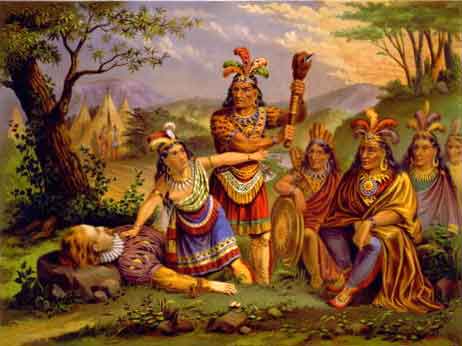
b)      Captain John Smith – a much more complex character than Disney would lead you to believe; short, swarthy, and hairy (by contemporary accounts); Smith proposed to overcome the natives militarily and then enslave them, using the Spanish model.

i)        Jamestown settlement – reliant upon Smith’s ability to cajole and threaten to get corn from the natives; the natives soon realize this and threaten to abandon the area and allow whites to stave to death.

(1)   Why did not natives follow through on this threat? Trade?

c)      “The Starving Time” (1607) – then inability of the Jamestown settlement to grow enough food for themselves, combined with the diseases they contracted which incapacitated a number of them, meant that for the first several years the people of the settlement were reliant upon food arriving for them from England.  When shipments were delayed or did not arrive, a number of settlers quietly starved to death.

i)        Smith’s leadership – ameliorated this condition somewhat, since he decreed and enforced that all settlers were to put in 4-6 hours a day in the fields (or they would not eat).

(1)   Reasons – the Virginia Company had no idea what it would take to set up a productive colony in North America; they sent workers like goldsmith and jewelers, whose crafts provided a newly established settlement with no useful skills, and would not for a number of years; the people sent to Jamestown were also top-heavy with gentlemen, who did no manual labor by station, and not enough husbandmen and farmers.

ii)       Completely dependent upon natives supplying them with food – but the relations with the natives were strained; battles with natives broke out in which military operations were carried out which would burn villages and destroy caches of the corn crop—which the English themselves were dependent upon.

iii)     Cannibalism – Recorded instance, in which a man killed his wife, chopped her up and ate her, in an area of abundant game, fish, fruits, nuts, and berries.  Also instances of the dead being dug up so that the living could eat them.

d)      Social composition of Jamestown settlers

i)        Gentlemen – 36 of 105 settlers, which meant that nearly 1/3 of settlers, expected that they would perform no manual labor because it was beneath their station in life.

ii)       Craftsmen – made up the largest portion of the population, but none expected to work outside of their area of training, or outside of their craft (due to restrictions that they had always practiced that craft under—namely, the Statute of Artificers.  Too often, their particular craft was not needed, so they sat around pursuing leisure activities (gambling, etc.) while they and their fellows starved to death.

iii)     Husbandmen and farmers – made up the smallest portion of the settlers, but they were expected to produce enough food for the entire settlement.

This organization of society seems senseless to us today—after all, if one were starving, why would you just accept that fate and not try to find food for yourself?  But many English were use to an inadequate diet and hunger while they were in England, and they had no expectation that life would be substantially different for them on a new continent.

VI)  The Tobacco Boom (1611-1630, approximately) – the best grade of tobacco came to Europe from Turkey; Virginia tobacco was considered a grade or two below that, but tobacco was destined to provide the colony with a way to attract new investment.  At first, tobacco was seen as undesirable, an unclean habit; it increasingly gained favor, however, with a resultant rise in the value of tobacco.

a)      Price boom – by 1619, the price a tobacco farmer could get for tobacco was approximately three shillings a pound (or approximately $1,500/hogshead barrel, which equaled about 300lbs.).  This price only prevailed for about ten years, however; as the market was flooded with Chesapeake tobacco, the price declined, until in 1630 the price for a pound of tobacco had declined to about a penny a pound (or $5.00/hogshead)

b)      Labor shortage – to take advantage of this tobacco boom, tobacco growers needed to get labor to the colony to produce the crop to sell to merchants in England.

i)        Tobacco labor-intensive – the growing, harvesting, and processing of tobacco were all labor-intensive.  It takes a year and a half for the tobacco plant to mature, and the plant needs a lot of attention to flourish.

(1)   One person could attend to approximately 2,000 tobacco plants, which in turn would yield about 500lbs of tobacco; therefore, the more labor one could employ (but not necessarily in the definition of pay), the greater one’s chances of making a substantial amount of money there were.

ii)       Labor “surplus” in England – England during this time was undergoing a period of consolidation of land holdings on the part of the landed gentry (the enclosure of the commons), and the early beginnings of the Industrial Revolution (where peasants who where being pushed out of farming were in the process of becoming wage workers in factories in urban areas).

iii)     Labor “recruitment” – from prisons and workhouses, as well as those recruits of “spirits” and “crimps” who simply kidnapped persons of the lower classes, and put them on ships to the Americas to be employed as indentured servants (a practice which was known among this population as being “barbadosed,” because Barbados was the destination of the greatest share of such people, to work on the sugar plantations)

(1)   “Seasoning” – ships with new indentured servants usually arrived in Virginia at the beginning of summer. The combination of a long, arduous journey, general malnutrition, and a variety of diseases then prevalent during the summer in the Chesapeake area (like malaria, typhus, and diphtheria), combined with the pace of work killed off a horrific number of workers.

(2)   Massacre of 1622 – a surprise attack by natives upon Jamestown resulted in the killing of 347 men, women, and children; this resulted in a retaliatory strike by the remaining Jamestown settlers, and a determination to wipe out natives in the area once and for all; however, its also prompted an investigation by Parliament which uncovered the fact that despite the immigration of 3,570 people in the three years proceeding the native attack, only 1,240 English subjects were alive at the time of the attack.  The population of Jamestown before this period of intensive immigration was 700—which meant that 3,030 people had died in the preceding three year time period.  On top of this, the Virginia Company was nearly bankrupt; in 1624 the crown took over responsibility for the settlements in Virginia.  The population losses decrease after this, but remained relatively high throughout the 1620s and 1630s.

c)      Population increase from 1640 – due to the drop in demand for tobacco (the market was glutted at this time period), other crops were grown which were then sold to plantations in the Caribbean

i)        Propagation of apple trees – used largely to make cider, which meant that less contaminated water was consumed, which decreased the prevalence of diseases like dysentery and typhus)

ii)       New arrivals in fall – rather than new workers arriving in the beginning of summer, they arrived at the beginning of fall, which gave them a longer time to acclimate themselves.

d)      New Problems

i)        Increased demand for land – as more servants survived their period of indenture, there was a corresponding increase in the demand for more land. By 1676, this increased demand for land led to Bacon’s Rebellion

(1)   Head rights – the term used to explain the right to land that one claimed when it could be proven that one making such a claim had paid for the passage of another to the colony (this helped provide a larger number of planters to employ indentured servants, who themselves were usually promised a substantial amount of land and the tools to work it in return for their labor); because unimproved land was more valuable than improved land (tobacco could only be grown for a three or four year period before exhausting the land), those who could afford to employ indentured servants benefited.

ii)       Increased costs of labor – as more indentured servants survived their period of service, they made greater demands for land.  When indentured servants did not survive the seven years of their service, it was more economically viable for large planters to employ indentured servants; as these indentured servants began to live longer, however, the employment of slaves became more attractive.

(1)   Higher initial cost of slavery – the employment of slaves had a higher start-up cost; however, since one could amortize this cost over the productive life of the slave, the cost ended up being less than that for indentured servants.
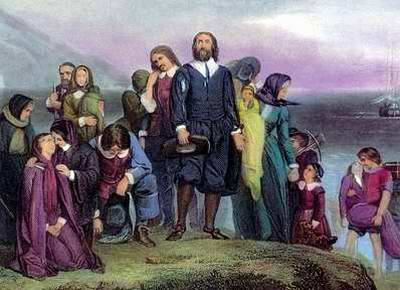
VII)           Puritanism – a movement for religious reform; the purpose was to reform the Church of England from the dangers of “Romanism;” Puritans called for a more radical cleansing of the Church of England from the remaining Catholic elements (vestments, sacraments, etc.), and for this they became known, derisively, as Puritans and as purifying radicals.       

a)      Religious movement

b)      Political and social movement – the response to many long-range changes that had been occurring in English society, as that society was changing from a feudal society to one we think of as more modern.

i)        Sought to overturn established church

ii)       Growth of cities – as enclosure became more prevalent, the growth of urban populations took off (Ex: London grew from a city of 75,000 in 1550 to a population of 325,000 in 1650)

iii)     Enclosure of the land – created a large body of people no longer tied to the land, or who were able to gain sustenance from it.  This shift in population also caused societal unrest, as a large group of “masterless” people (previously, peasants who were tied to the land had been answerable to the lord of the manor—as they were forced to move off the land, this relationship ended) moved into cities, where they had to engage in a variety of pursuits (some of which we can classify as “criminal”) to eke out a living.

iv)     Increase on trade – trade became more important during this time period, which increased the exchange of goods—and ideas.

VIII)         All of this contributed to the rise of a capitalist society, in which individuals had more autonomy.  Peasants were uprooted from the land, which provided the capitalists with the labor that they needed to operate their factories and ships (in England)—but this also led to an increase in vagabondage and crime, particularly in the growing urban areas as people moved into cities.

a)      Medieval web of responsibility

i)        Reciprocal relationships – although the medieval lord of the manor demanded labor and other compensation from his serfs or tenants, he was also obligated to certain responsibilities towards theses people, like adequate food and shelter.  This system depended upon reciprocity between the classes.

ii)       Emerging capitalist system – created instability in English society because capitalism ended these webs of responsibility, allegedly allowing individuals to rise according to their capabilities (although if ones ancestors had been extremely capable, or politically connected, this lack of capability could be overcome by inherited wealth).

b)      Puritan reaction – while the Puritans attacked the hierarchical governance of churches (especially the Roman Catholic Church), and emphasized one’s personal relationship with God, they deplored individualism in other areas of life, which they saw as leading to social anarchy. The downfall of Anne Hutchinson, in fact, was due to her claim that God spoke to her directly (although her challenges to the male power structure certainly contributed)

i)        Individualism a threat to society – individualism was a threat to the community, to the concept of community in the Puritan world.

ii)       Work as a service to God – one did not have to occupy a high station in life to serve God (although that became a sign that God certainly favored you), one only had to work hard in whatever one’s position was; each calling was equally worthy in God’s eyes.

(1)   This did not create the concept of an egalitarian society; there were still social superiors and inferiors, and the latter were still supposed to defer to the former.

iii)     God’s “elect” – must not only save themselves, but also must assume the burdens of civil government to reform society at large; those who resisted these reforms had to be coerced and controlled, directed and dominated.  Puritans did face harassment in England, particularly in the 1620s under James I.  This, combined with the economic opportunity opening in other countries (particularly the Netherlands, which had a more tolerant attitude to any religion other than Catholicism) while England was suffering the effects of an economic depression, led many Puritans to leave England and settling in Leiden, the Netherlands.  Nevertheless, the Puritans were driven less by motives of profit during this time then by an ideological commitment to build a Christian utopia, organized around the idea of community and possessed by the idea that industriousness and self-discipline were indispensable parts of worshipping God.

IX)  Puritan Migration

a)      Unhappiness in Leiden – the Netherlands was truly a tolerant country in regard to religious practice, but because of these younger members of the Puritan flock began to lose their sense of Englishness, which became increasingly important to their elders, who feared that they would be assimilated into Dutch culture.

b)      Settlement in the “New World” – to ensure that the Puritan children retained their Englishness, the sect elders decided to pursue establishing and “English” settlement in the new world; the king granted them a charter to settle in “Virginia,” but they intentionally sailed further north to put as much distance between themselves and Jamestown as possible.

i)        1620 Landing at Plymouth Rock – the Puritans on the Mayflower sailed into Massachusetts Bay, and scouted out several locations before settling on Plymouth, which was closer to the mainland and presented better prospects for establishing family farms

(1)   Other settlements – non-Puritan settlements on Cape Cod, devoted to commercial fishing and allied endeavors, were established soon afterwards


ii)       1630 Mass Migration – during 1630, eleven ships with nearly 700 people landed in the Massachusetts Bay Colony; between 1630 and 1640 12,000 people migrated to New England.  With a healthier climate, and the Puritan propensity to propagate, the colony greatly grew in size over a relatively brief period of time.

(1)   The addition of this great number of migrants made the Puritan communities less reliant upon natives, while at the same time the appropriated more land—thereby increasing tensions with native groups.

c)      Puritan Covenant – the “Citty on the Hill”

i)        Established an authoritarian regime

(1)   No diversity of opinion concerning religious belief was tolerated for very long (and since secular and religious life were intricately bound together, questions of a political nature quickly became of a religious nature, and vice versa)

(2)   Political representation was limited to those “filled with God’s grace” – that is to say, members of the church

(3)   Participants agreed to give up certain individual and political freedoms to accomplish greater goals

Tuesday, August 30, 2011

The Spanish Black Legend

I)              The Spice Trade – spices, particularly pepper, became extremely desirable in Europe during the late 14th and early 15th centuries; in the days before effective refrigeration, meat was preserved by curing it with salt, smoking it, or drying it in the air – methods which tended to remove much of the flavor.  Spices, therefore, became highly prized.

A)    Control of the spice trade – therefore became a highly prized commodity, itself.

1)      Spices’ origination – the most desirable spices originated in Asia, particularly peppers and cinnamon.

(a)    India – traders from India sailed the Indian Ocean, and sold spices from India to Muslim traders in eastern Africa; from eastern Africa, these spices were transported overland in camel caravans to the Levant (what we today refer to as Israel and Palestine and Lebanon and Syria), where they were traded for other goods (mainly gold) to traders from the Italian city-states, principally Genoa and Venice (important later, because Columbus himself was Genoese, and this was a contributing factor in the Portuguese king rejecting his plan to sail westward across the Atlantic to Asia).  These Italian merchants then distributed the spices throughout the rest of Europe.

(i)                  Price of spices – because of the transportation costs of taking the spices over land, and the fact that there was also profit taking by two groups of middlemen, the cost of spices were out of reach for all but the wealthiest Europeans.  This high cost, and the demand for spices, made it an attractive target for other Europeans outside of the Italian city-states, because they would be able to charge slightly lower prices for the spices, and still make a hefty profit.  This possibility made the spice trade attractive to the Portuguese, and to freebooters like Christopher Columbus.

B)     Henry the Navigator – member of the royal family in Portugal, part of the invading party and one of the Portuguese heroes at Cueta.  With part of the booty from the haul at Cueta, Henry set himself up on an estate in the far southeast corner of Portugal (show location on map).  From this location, Henry set up a school of navigation and maritime trades (although known as Henry the Navigator, he did no actual sailing himself), where he was able to attract talented map makers, and the best and brightest from around Europe in navigation, as well as a number of younger sons of noblemen in Portugal who saw the opportunity to sail to faraway lands as a means of gaining wealth and status that were denied them should they remain in Portugal (explain importance of primogeniture in inheritance).

1)      Development of ocean going vessels – because of its physical location (the country furthest west in Europe, without a good port on the Mediterranean Sea), the Portuguese fishing boats had always sailed into the Atlantic to fish.  They were always refining this technology, and therefore had experienced shipbuilders to call upon when Henry set up his school of navigation

(a)    The Caravel (draw picture) – important, because it was the first European ship to be three masted, which allowed more sail area, which meant that a larger ship could be moved through the water efficiently.

2)      Explorations of the Portuguese

(a)    West Coast of Africa – as Henry’s school refined its map making and ship building, they also began exploring down the African coast.

(b)   Portuguese “factories” – fortified establishments on the African coast, from which the Portuguese traded with local Africans.

(i)                  1444 the Portuguese traded for the first African slaves, which were then returned to Lisbon and made life long servants.  Slavery was not unique to Africa; it was an ancient means of controlling labor, and was in fact used throughout the world (including North and South America before the arrival of the Europeans).  The Slavic people, in fact, were so named because other Europeans believed that they made the best slaves.  As Christianity spread, strictures against enslaving other Christians in Europe began to be applied—a practice copied from Muslims, who did not enslave co-religionists (although they did enslave Christians)

(c)    1487 Bartholomew Dias rounded the Cape of Storms (renamed by the king of Portugal the Cape of Good Hope, to encourage financiers to invest in voyages around the southernmost cape of Africa; this proves that Africa does end (there had been speculation that it did not), and leads to the Portuguese determination to sail around Africa to Asia (India in particular).  This information is kept secret by the Portuguese, however.

3)      Christopher Columbus – Genoese sailor and adventurer, who was in Lisbon to gather intelligence officially, but the government in Lisbon had kept a tight lid on their explorations (other nations were aware, however, that ships were regularly sailing from Lisbon into the Atlantic.

(a)    Columbus becomes enamored with the idea of sailing to the west to reach India, and pitches this idea to the king of Portugal, who turns him down (as do the kings of England and France, as well).  By this time the Portuguese probably figure they have too much time and money invested in sailing around Africa (which they know will work), rather than sailing west into “unknown” territory (the Portuguese, in fact, may have already gathered enough information from voyages into the Atlantic to know that there was a large land mass that was not Asia at the western edge of the Atlantic Ocean).

C)    Reconquista in Spain

1)      1492 – Castille was united with Granada, which to that time had been held by the Moors; this allowed Ferdinand to unite all of the provinces outside of Portugal into one united kingdom

(a)    Spanish Inquisition – also begins at this time; fidelity to the teaching of the Roman Catholic Church become an early manifestation of Spanish nationalism, and Muslims and Jews who remained in Spain were forced to convert (the so-called “New Christians”)

2)      Voyage of Columbus – financed by Spain at the insistence of Queen Isabella; the favorable terms that Columbus was able to negotiate were indicative of the confidence of the Spanish government in the likely success of his voyage (meaning, not very much).

(a)    Made landfall in the Bahama Islands, and brings back two captives that he calls “Indians,” because he believed that he had discovered India (this belief he later questions, but he never figured out to the day he died that what he indeed discovered was a whole new hemisphere.

D)    Papal Bull of 1493 – the Pope divided the world into two spheres of influence between Spain and Portugal (another indication that the Portuguese were already aware of the new land mass at the western edge of the Atlantic Ocean, since they were able to negotiate the division to a longitude that gave them a foothold in the western hemisphere in present day Brazil); this cuts out both France and England, however.

1)      England – Henry VIII broke with Rome over not being allowed to rid himself of his wife, who had “failed” to produce for him a male heir—he declared himself head of the Church in England.  Henry ruled as king from 1509 to 1547.  Although wife number three did produce a male heir (Edward VI), he was a sickly child, and Henry subsequently married three more times.  The last years of his reign were spent attempting to combat the forces of the Protestant Reformation, which his own defiance of the authority of the Church had done so much to unleash. After Edward’s death, his sister, Elizabeth, succeeded him. 

2)      Authority of Pope challenged elsewhere

(a)    Martin Luther – disagreed with and challenged the selling of “indulgences” (forgiveness of sins); Luther nailed his challenge to the selling of these indulgences, known as the 95 theses, to the door of the church in Wittenberg.

(b)   John Calvin – preached that indulgences were worthless in attaining eternal salvation, as were “good works.”  Calvin believed in the idea of “predestination;” that is, God had already chosen who would be called to heaven, and nothing an individual did on earth would change that.  This idea challenged not only the authority of the pope, but eventually the authority of kings, as well.


II)              Africa in the Age of European Discovery

A)    Social organization

1)      Economic Development – scholars in the past have long believed that the current underdevelopment of the African continent has its antecedents during the period before European exploration; however, recent scholarship has called this into question.

(a)    Manufacturing – most African societies produced goods that they needed; trade with Europeans brought them different goods.  In some areas of Africa, the manufacture of iron and steel products was as good, or better, than comparable manufactories in Europe.

(b)   Trade – trade with Europe was mainly for “luxury” goods—different kinds of textiles, for instance, or goods that were sold more cheaply by Europeans than they could obtain from fellow Africans, or some goods—like alcohol—, which were not available locally.


2)      Labor organization and slavery

(a)    The slave trade was controlled by the African people themselves; Europeans did not invade Africa and forcibly take many slaves—the “factories” that were established on the African coast stayed there, initially, because Africans in power wanted them to remain there; after slavery began to have a dehabilitating effect on African societies this control was diminished. The weaponry developed by Europeans—particularly muskets and cannon—were particularly sought after trade items (as well as less violent items like woolen cloth—a novelty item in sub-Saharan Africa—and the highly sought after

(b)   Slavery did not result from a weakness in African society—slavery had always been around, all over the world.

(i)                  A contributing factor to this was that in many African societies during this time period, land had no value as property—one had to have the labor available (mainly slave labor) to produce goods on this land to create value or wealth.

III)       The Mexica and the Conquistadores
A)      Mexica culture
1)        Hierarchical society
2)       Human sacrifice—to appease a sun god; to ensure the continued appearance of the sun. Mostly practiced on the people the Mexica conquered and forced tribute from—which gave the Spaniards lots of potential allies when they landed.

B)      Spanish intervention

1)        Hernan Cortez—landed in present-day Mexico in 1518, with a small band of men (several hundred). Most of men were mounted on horses, however, and accompanied as well by a compliment of mastiff dogs, trained to attack, muskets, and cannon. Upon landing, Cortez ordered the ships beached and burned, and the lead nails  recovered for use as musket balls


C)      Tenochtitlan—the capital of the Mexica empire. Cortez and his small band, accompanied by thousands of new native allies, were welcomed into the city by the rather capricious Mexica leader, Monctezuma. The Spanish were particularly impressed with the amount of gold used in the public buildings, and in order to acquire a portion, decided to hold Monctezuma for ransom. This ends disastrously, and the Spanish are forced to beat a hasty retreat with only a small portion of the gold they sought. Rather than leave behind these riches, however, Cortez rallies his men, recruits thousands of his Indian allies to throw off the yoke of tyranny imposed by the Mexica, and re-enters Tenochtitlan—only to find token resistance, because in the intervening months, the combination of microbes introduced by the  Spanish and internal problems within Mexica society had devastated the population there.

D)      Gold and Silver—in the land of the Mexica—Mexico—the Spanish found plentiful supplies of gold and silver, which they forced the natives to mine (and eventually, when the native labor supply died out, African slaves), and the proceeds were shipped back to Spain, where it financed a large share of the variety of wars Spain fought against other peoples in Europe.

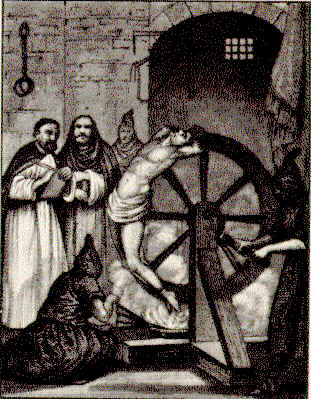
E)      The Black Legend—the mistreatment of the native population by Spanish colonial officials was brought to the attention of the world by a Spanish Dominican friar, Bartolome de las Casas. Wildly exaggerated tales of Spanish behavior became on of the justifications for both England and France to challenge the right of the Spanish monarchy to claim most of the New World for them.

IV)     Spain and the “Black Legend”  -- Spain’s mistreatment of native inhabitants in the New World legitimated the attempts by other European governments (Netherlands, France, and England) to attempt to undermine Spanish control, and to make their own claims in order to proselytize Christianity—and to seek riches in the territory that they could claim and hold.
A)      Cortes and Pizzaro—the phenomenal success of Cortez with the Aztecs and Pizzaro with the Inca people set the early model for Spanish behavior in the new world—the conquest. This model had only limited success after Cortes and Pizzaro, however; outside of the centralized native societies in Mexico and South America, the Spanish found it nearly impossible to maintain their advantage and control.
i)        Cabeza de Vaca—part of a conquistadores party led by Panfilo de Narvaez, who was determined to outdo rival Cortes in Florida. Plagued by hit-and-run raids from Apalachee people, planned to build barges and coast around Gulf from present-day Tampa back to Mexico; on the Texas coast five barges caught in storm and wrecked. Passed among numerous native peoples because of their “healing powers.” Ultimately made it back to Mexico, where Cabeza de Vaca became an advocate for humane treatment of natives (and to publish an account of the to-then inhumane treatment; along with Casas, these accounts led to a change in policy for Spanish—but also to the idea of the Black Legend); two others in the party came back with fantastic stories of lost cities filled with gold.

2)       Hernando de Soto—accompanied Pizzaro to Peru, which had made him a rich man, but he wanted to outdo Cortes, as well. Both Soto and Coronado, who followed him, were supposed to follow the new, gentler “pacification” policy of the Spanish government. Once in the bush, however, both leaders permitted their men to follow the old conquistador’s model of rape, pillage, murder and mayhem. Along with the microbes that accompanied the Spaniards, this devasted the Mississippian peoples, forcing them to abandon their cities (the seats of their advanced culture), and move in among the hill people, who had been their subjects, and who had a less advanced culture.

3)     Francisco Vasquez de Coronado—excited by the prospects of finding “Cibola,” a city in the American southwest purported to rival the wealth of Tenochtitlan, Coronado invested most of his own wealth in financing a party to find it in 1540. As the group neared the Rio Grande, they came upon a group of Pueblo people; appropriating their food, houses, and women.


B.) Spanish forces in Florida—because of the success of privateers, Spanish officials came to see the necessity of controlling the waters between Florida and the Bahamas. To that end, they set up a military installation at St. Augustine, the first permanent settlement of Europeans in the present-day confines of the US. In order to hold this settlement, however, felt it necessary to defeat nearby settlement of French Huguenots (protestants) who the Spanish “put to the knife.” Although maintaining St. Augustine was a money loser, Spain did so in order to attempt to keep privateers from feasting on the annual convoy between Mexico and Spain.

Sunday, August 28, 2011

The Age of European Exploration

Age of European Exploration – why do countries in Europe begin to venture out into the Atlantic?

I)                   Gold, Spices, and God – much of Christian Europe had been under threat of Muslim invasion before 1492  (Ottoman Empire from the east—eventually seizing Constantinople in 1453, which also gave them control of the lucrative spice trade between Asia and Europe; and the Moors from North Africa in the Iberian Peninsula,); the dislocation this caused in European countries meant that much of the knowledge and learning that had previously gone on in that area was temporarily lost, because knowledge that began with Greek sources was now distrusted.

A)    The Crusades – preceded the Dark Ages, was an attempt by Christian Europe to “reclaim” the Holy Lands for Christianity.  Provided an outlet for Christian fervor, as well as for European nobility to cover themselves in glory and loot.

1)      Failure of the Crusades – the Ottoman empire was a threat to Central Europe (then known as the Holy Roman Empire?), while Moors from Northern Africa invaded the Iberian Peninsula

B)     Bubonic Plague – the so-called “Black Death”

1)      Devastates European population – during the 1340s areas in Europe lose from 1/3 to ½ of their population.  The Bubonic Plague also affects parts of Africa, because Africa is affected by many of the same diseases as Europe—which becomes very important later as diseases Europeans bring with them wipe out large numbers of Western Hemisphere natives, which are then replaced with African slaves.

2)      Consolidation of European political bodies – the devastation caused by the Plague created a great deal of social turmoil in Europe, which allowed monarchs there to consolidate their political power (the natural reaction of people in times of crisis—witness 9/11)

II)                 Reconquista of the Iberian Peninsula – the ideology of the Reconquista contributed to the creation of a nationalist impulse, which also created the atmosphere conducive to expansionism in both Iberian countries.

A)    Moorish Spain – the Iberian Peninsula (present day Spain and Portugal) was completely dominated by invaders from North Africa, known as the Moors.  Moorish cultural practices (architecture, the sheltering of women, music—particularly the aud, the ancestor of today’s guitar) all have had a profound effect upon Spanish culture to this day.

B)     Moorish Portugal – Portugal came under many of the same influences, but the Moors were in control for a much shorter period of time.  Portugal became an independent monarchy early in the 15th century (the early 1400s).

1)      Reconquista of Portugal – in 1350, the House of Aviz overcame the Moors, and consolidated their control over the area that makes up modern-day Portugal.

2)      Invasion of Ceuta – in 1415, Portugal became the first European country since the Crusades to launch a successful invasion of Muslim held territory, when the army laid siege to the North African city (in present day Morocco) of Cueta.  The ostensible reason for this is to extend the reach of Christianity; however, the Portuguese also know that Cueta is a large marketplace for trading gold and silver for spices from Asia.  From intelligence gathered from sources in Cueta, the Portuguese learned of tales of gold beyond the great desert (the Sahara) in southern Africa.

III)              The Spice Trade – spices, particularly pepper, became extremely desirable in Europe during the late 14th and early 15th centuries; in the days before effective refrigeration, meat was preserved by curing it with salt, smoking it, or drying it in the air – methods which tended to remove much of the flavor.  Spices, therefore, became highly prized.

A)    Control of the spice trade – therefore became a highly prized commodity, itself.

1)      Spices’ origination – the most desirable spices originated in Asia, particularly peppers and cinnamon.

(a)    India – traders from India sailed the Indian Ocean, and sold spices from India to Muslim traders in eastern Africa; from eastern Africa, these spices were transported overland in camel caravans to the Levant (what we today refer to as Israel and Palestine and Lebanon and Syria), where they were traded for other goods (mainly gold) to traders from the Italian city-states, principally Genoa and Venice (important later, because Columbus himself was Genoese, and this was a contributing factor in the Portuguese king rejecting his plan to sail westward across the Atlantic to Asia).  These Italian merchants then distributed the spices throughout the rest of Europe.

(i)                  Price of spices – because of the transportation costs of taking the spices over land, and the fact that there was also profit taking by two groups of middlemen, the cost of spices were out of reach for all but the wealthiest Europeans.  This high cost, and the demand for spices, made it an attractive target for other Europeans outside of the Italian city-states, because they would be able to charge slightly lower prices for the spices, and still make a hefty profit.  This possibility made the spice trade attractive to the Portuguese, and to freebooters like Christopher Columbus.

B)     Henry the Navigator – member of the royal family in Portugal, part of the invading party and one of the Portuguese heroes at Cueta.  With part of the booty from the haul at Cueta, Henry set himself up on an estate in the far southeast corner of Portugal (show location on map).  From this location, Henry set up a school of navigation and maritime trades (although known as Henry the Navigator, he did no actual sailing himself), where he was able to attract talented map makers, and the best and brightest from around Europe in navigation, as well as a number of younger sons of noblemen in Portugal who saw the opportunity to sail to faraway lands as a means of gaining wealth and status that were denied them should they remain in Portugal (explain importance of primogeniture in inheritance).

1)      Development of ocean going vessels – because of its physical location (the country furthest west in Europe, without a good port on the Mediterranean Sea), the Portuguese fishing boats had always sailed into the Atlantic to fish.  They were always refining this technology, and therefore had experienced shipbuilders to call upon when Henry set up his school of navigation

(a)    The Caravel (draw picture) – important, because it was the first European ship to be three masted, which allowed more sail area, which meant that a larger ship could be moved through the water efficiently.

2)      Explorations of the Portuguese

(a)    West Coast of Africa – as Henry’s school refined its map making and ship building, they also began exploring down the African coast.

(b)   Portuguese “factories” – fortified establishments on the African coast, from which the Portuguese traded with local Africans.

(i)                  1444 the Portuguese traded for the first African slaves, which were then returned to Lisbon and made life long servants.  Slavery was not unique to Africa; it was an ancient means of controlling labor, and was in fact used throughout the world (including North and South America before the arrival of the Europeans).  The Slavic people, in fact, were so named because other Europeans believed that they made the best slaves.  As Christianity spread, strictures against enslaving other Christians in Europe began to be applied—a practice copied from Muslims, who did not enslave co-religionists (although they did enslave Christians)

(c)    1487 Bartholomew Dias rounded the Cape of Storms (renamed by the king of Portugal the Cape of Good Hope, to encourage financiers to invest in voyages around the southernmost cape of Africa; this proves that Africa does end (there had been speculation that it did not), and leads to the Portuguese determination to sail around Africa to Asia (India in particular).  This information is kept secret by the Portuguese, however.

3)      Christopher Columbus – Genoese sailor and adventurer, who was in Lisbon to gather intelligence officially, but the government in Lisbon had kept a tight lid on their explorations (other nations were aware, however, that ships were regularly sailing from Lisbon into the Atlantic.

(a)    Columbus becomes enamored with the idea of sailing to the west to reach India, and pitches this idea to the king of Portugal, who turns him down (as do the kings of England and France, as well).  By this time the Portuguese probably figure they have too much time and money invested in sailing around Africa (which they know will work), rather than sailing west into “unknown” territory (the Portuguese, in fact, may have already gathered enough information from voyages into the Atlantic to know that there was a large land mass that was not Asia at the western edge of the Atlantic Ocean).

C)    Reconquista in Spain

1)      1492 – Castille was united with Granada, which to that time had been held by the Moors; this allowed Ferdinand to unite all of the provinces outside of Portugal into one united kingdom

(a)    Spanish Inquisition – also begins at this time; fidelity to the teaching of the Roman Catholic Church become an early manifestation of Spanish nationalism, and Muslims and Jews who remained in Spain were forced to convert (the so-called “New Christians”)

2)      Voyage of Columbus – financed by Spain at the insistence of Queen Isabella; the favorable terms that Columbus was able to negotiate were indicative of the confidence of the Spanish government in the likely success of his voyage (meaning, not very much).

(a)    Made landfall in the Bahama Islands, and brings back two captives that he calls “Indians,” because he believed that he had discovered India (this belief he later questions, but he never figured out to the day he died that what he indeed discovered was a whole new hemisphere.

D)    Papal Bull of 1493 – the Pope divided the world into two spheres of influence between Spain and Portugal (another indication that the Portuguese were already aware of the new land mass at the western edge of the Atlantic Ocean, since they were able to negotiate the division to a longitude that gave them a foothold in the western hemisphere in present day Brazil); this cuts out both France and England, however.

1)      England – Henry VIII broke with Rome over not being allowed to rid himself of his wife, who had “failed” to produce for him a male heir—he declared himself head of the Church in England.  Henry ruled as king from 1509 to 1547.  Although wife number three did produce a male heir (Edward VI), he was a sickly child, and Henry subsequently married three more times.  The last years of his reign were spent attempting to combat the forces of the Protestant Reformation, which his own defiance of the authority of the Church had done so much to unleash. After Edward’s death, his sister, Elizabeth, succeeded him. 

2)      Authority of Pope challenged elsewhere

(a)    Martin Luther – disagreed with and challenged the selling of “indulgences” (forgiveness of sins); Luther nailed his challenge to the selling of these indulgences, known as the 95 theses, to the door of the church in Wittenberg.

(b)   John Calvin – preached that indulgences were worthless in attaining eternal salvation, as were “good works.”  Calvin believed in the idea of “predestination;” that is, God had already chosen who would be called to heaven, and nothing an individual did on earth would change that.  This idea challenged not only the authority of the pope, but eventually the authority of kings, as well.

IV)              Africa in the Age of European Discovery

A)    Social organization

1)      Economic Development – scholars in the past have long believed that the current underdevelopment of the African continent has its antecedents during the period before European exploration; however, recent scholarship has called this into question.

(a)    Manufacturing – most African societies produced goods that they needed; trade with Europeans brought them different goods.  In some areas of Africa, the manufacture of iron and steel products was as good, or better, than comparable manufactories in Europe.

(b)   Trade – trade with Europe was mainly for “luxury” goods—different kinds of textiles, for instance, or goods that were sold more cheaply by Europeans than they could obtain from fellow Africans, or some goods—like alcohol—, which were not available locally.

2)      Labor organization and slavery

(a)    The slave trade was controlled by the African people themselves; Europeans did not invade Africa and forcibly take many slaves—the “factories” that were established on the African coast stayed there, initially, because Africans in power wanted them to remain there; after slavery began to have a dehabilitating effect on African societies this control was diminished. The weaponry developed by Europeans—particularly muskets and cannon—were particularly sought after trade items (as well as less violent items like woolen cloth—a novelty item in sub-Saharan Africa—and the highly sought after

(b)   Slavery did not result from a weakness in African society—slavery had always been around, all over the world.

(i)                  A contributing factor to this was that in many African societies during this time period, land had no value as property—one had to have the labor available (mainly slave labor) to produce goods on this land to create value or wealth.

V. The Mexica and the Conquistadores
            A. Mexica culture
                        1. Hierarchical society
                        2. Human sacrafice—to appease a sun god; to ensure the continued appearance of the sun. Mostly practiced on the people the Mexica conquerored and forced tribute from—which gave the Spaniards lots of potential allies when they landed.

            B. Spanish intervention
                        1. Hernan Cortez—landed in present-day Mexico in 1518, with a small band of men (several hundred). Most of men were mounted on horses, however, and accompanied as well by a compliment of mastiff dogs, trained to attack, muskets, and cannon. Upon landing, Cortez ordered the ships beached and burned, and the lead nails  recovered for use as musket balls
                        2. Dona Mariana—a native woman, well-versed in a variety of native languages, was brought along to act as translator for Cortez.  She was instrumental in helping Cortez make allies among the  native peoples—which eventually proved to be the difference.

            C. Tenochtitlan—the capital of the Mexica empire. Cortez and his small band, accompanied by thousands of new native allies, were welcomed into the city by the rather capricious Mexica leader, Monctezuma. The Spanish were particularly impressed with the amount of gold used in the public buildings, and in order to acquire a portion, decided to hold Monctezuma for ransom. This ends disasterously, and the Spanish are forced to beat a hasty retreat with only a small portion of the gold they sought. Rather than leave behind these riches, however, Cortez rallies his men, recruits thousands of his Indian allies to throw off the yoke of tyranny imposed by the Mexica, and re-enters Tenochtitlan—only to find token resistance, because in the intervening months, the combination of microbes introduced by the  Spanish and internal problems within Mexica society had devastated the population there.

VI. Conclusion.

Tuesday, August 23, 2011

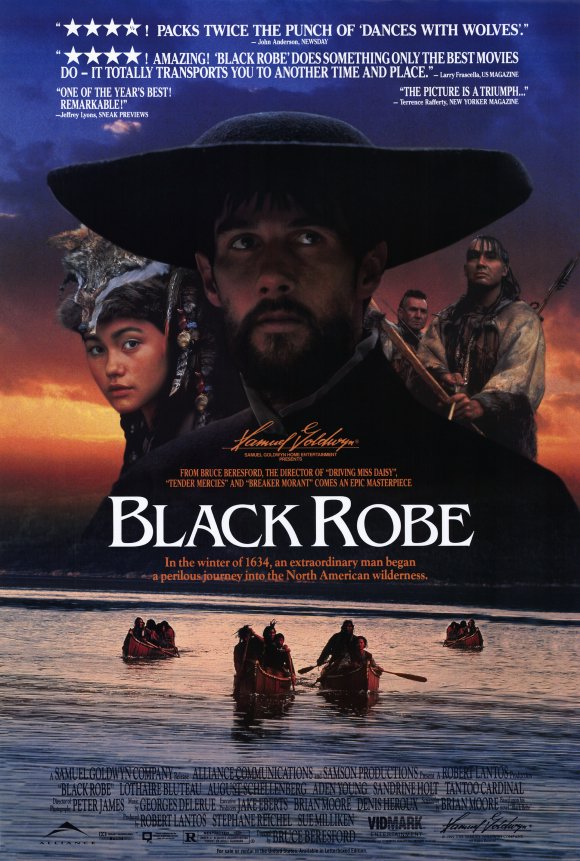
Assignment 1--The Black Robe and Jesuit Relations

The Black Robe, although a work of fiction, is based upon events that actually happened—as chronicled in a popularly known as Jesuit Relations. You can find an electronic version of part of this series at this link: http://puffin.creighton.edu/jesuit/relations/relations_01.html, or from the link on the class blog. After reading the section entitled “The Conversion of the Savages Who Were Baptized in New France,” compare it with the conversion account in Black Robe. What are the points of similarity, and what are the differences? “The Conversion of the Savages …” is what historians call a primary source, while Black Robe is a work of fiction. Which one do you think is a more accurate depiction of the past—and why?

            Your answer should fill at least 2 machine produced pages, using a conventional font, twelve-point type, and one-inch margins all around the paper. This should be handed in at the beginning of class on Friday, September 2.